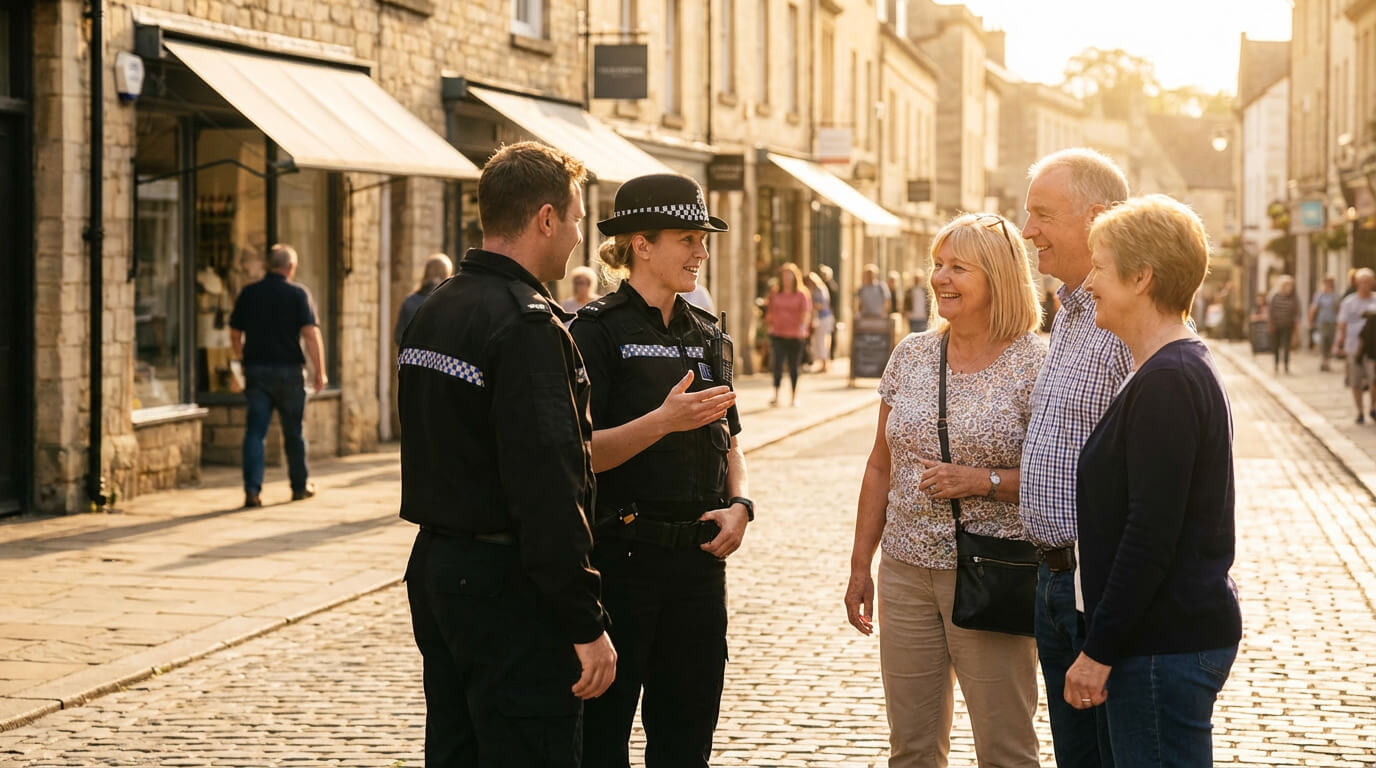
Every UK police force has a quiet superpower it does not fully see. Around 6,000 Special Constables across England and Wales (and falling, per the latest Home Office police workforce bulletin) give their time to policing - unpaid, fully warranted, with the same powers as their regular colleagues. They typically commit at least 16 hours a month, often far more, depending on the force, on top of full-time day jobs and family lives.
What most forces capture about each Special is fairly limited: their warrant number, their training record, their hours, perhaps which OST or PIP qualifications they have completed. Their uniform tells you they are a Special. The system tells you what they are authorised to do.
What it almost never tells you is the rest of the person.
The day job is part of the story
The Special pulling on a uniform on a Saturday night might be a software engineer Monday-to-Friday, with deep technical capability the force's own digital team would value. The next one might be a maths teacher whose curriculum design experience would transform the cadet programme. The next might be an NHS paramedic, an HR director, an accountant, a barrister, a project manager, a bilingual interpreter, a parish councillor.
None of that information lives anywhere the force can act on. It might be in the duty inspector's memory if they have known the Special for years. It might come up in a Mess conversation. Mostly it just sits invisible - and the force misses it.
This is not a small problem. Specials are bringing in capabilities the force pays significant money to access externally. The cost of not knowing is enormous.
Why volunteers under-report even more than employees
If you ask a Special whether they have skills the force should know about, the answer you usually get is "not really". This is not modesty. It is the rational response to a system that has never asked, has never done anything with the answer when it has asked, and has never made it clear what kind of skills are even relevant.
Most volunteers think their job is to do the role they signed up for. They did not sign up to be a free consultant. They are not going to volunteer their day-job expertise unless it becomes obvious that the organisation values it - and would deploy it appropriately, not exploitatively.
That distinction matters enormously. A volunteer who has their professional skills used appropriately - in moments where it genuinely helps - feels seen and valued. A volunteer who has their professional skills mined and exploited - "you do this for free at your day job, can you do it for us too?" - feels used.
The difference is not the skill. It is the relationship around it.
The four things volunteers actually bring
To value the whole person, you have to recognise the categories of capability they bring. For Specials and similar warranted volunteers, these usually include:
1. Their warranted role
The visible bit. Trained, qualified, deployed, recorded.
2. Their professional day-job capability
The skills they have built in their main career - which may be directly relevant (an NHS Special who can talk meaningfully about mental health crises) or laterally relevant (an accountant who can spot fraud patterns, a teacher who can run safeguarding training, a tradesperson who can assess damage at a scene).
3. Their hobby and interest skills
The off-duty skills that occasionally become professionally relevant - the rugby coach who is brilliant with cadets, the photographer whose pictures elevate a community engagement campaign, the amateur historian who knows every street in the borough.
4. Their lived experience
The community knowledge, language skills, cultural fluency, and life context that come from being human - and that often map directly to what good policing requires.
Most workforce systems capture maybe 1.5 of these. The other 2.5 are invisible - until somebody specifically asks.
Why this matters more for volunteers than employees
For paid employees, missing some of their capability is a cost - you might pay externally for something they could do, you might miss promoting them into a role they would thrive in. Annoying. Wasteful. Survivable.
For volunteers, missing their capability is also a retention issue. People volunteer because they want to contribute. When they feel under-utilised, under-recognised, or like a number, they drift. The hours start dropping. The shifts get harder to cover. Eventually they hand in their warrant card.
The volunteer who is asked to use the skills they are proud of - sensitively, occasionally, when it genuinely helps - stays. The one who is treated as undifferentiated labour eventually leaves.
And every leaver costs more to replace than the cost of having known what they could do in the first place.
Practical things forces can do
Build a skills profile that goes beyond the warrant
The standard volunteer record is built around what the force authorised them to do. A useful skills profile is built around what the person actually can do. Day job, qualifications, languages, hobbies, life experience. Not because everything will be deployed - but because the picture exists when an opportunity arises.
Make consent explicit and reciprocal
Volunteers should choose what to share, and what they consent to being approached about. The Special who is happy to be tapped for IT advice should be able to say so. The one who really does not want the day job to come into the volunteering should be able to say that too. Both are legitimate.
Use the data sparingly and well
The fastest way to lose volunteer trust is to treat their capability as unlimited resource. When the day-job skill genuinely helps - the bilingual Special asked to talk to a witness, the technically-minded Special consulted on a scene - that is appropriate. When it becomes "we always need digital help, can you sort it?" - that is exploitation.
The principle: treat each use of a volunteer's wider skills like you would treat a favour. Genuinely useful. Genuinely appreciated. Never assumed.
Surface skills through proper conversation, not forms
A new Special joining a force is given a lot of forms. Most of them are admin. The chance to genuinely talk through what they bring - in a way that invites depth, that is patient, that is unhurried - is rare. Whether through a buddy conversation, a structured one-to-one, or an AI-supported skills discovery, the format has to invite real answers.
Recognise the contribution explicitly
Volunteers do not volunteer for praise, but they do notice when their contribution is acknowledged in real terms. Recognising that the Special who runs the cadet maths sessions is doing something the force would otherwise pay external trainers for - and saying so - is worth more than another long-service certificate.
The same principle applies far beyond policing
Specials are a particularly clear example because they hold real warranted authority. But the same dynamic plays out in every voluntary organisation - charity trustees, Scout leaders, magistrates, school governors, hospital volunteers, RNLI crew, mountain rescue, parish councillors. Every one of them is bringing more than the role description captures. Most organisations capture almost none of it.
The organisations that genuinely value their volunteers - the ones with the strongest retention, the deepest engagement, the most loyal cohorts - are the ones that have figured out how to see the whole person. Not just the role they signed up for. The whole person, with their professional life and their hobbies and their history and their context.
It costs nothing to have that conversation. It is the not having it that costs.
Why we built this into SkillDrill
Special Constabularies were one of the first contexts we built SkillDrill for. The combination of a complex, capable workforce and a workforce system designed only to track the visible role meant the gap between potential and practice was huge.
What we have learned is that volunteers respond extraordinarily well to being asked properly. Given a thoughtful, unhurried conversation about what they bring, they share things their force never knew - and they feel valued in a way that the standard warrant card and uniform never quite captured.
That is what valuing the whole person actually looks like. Not as a slogan. As a system.