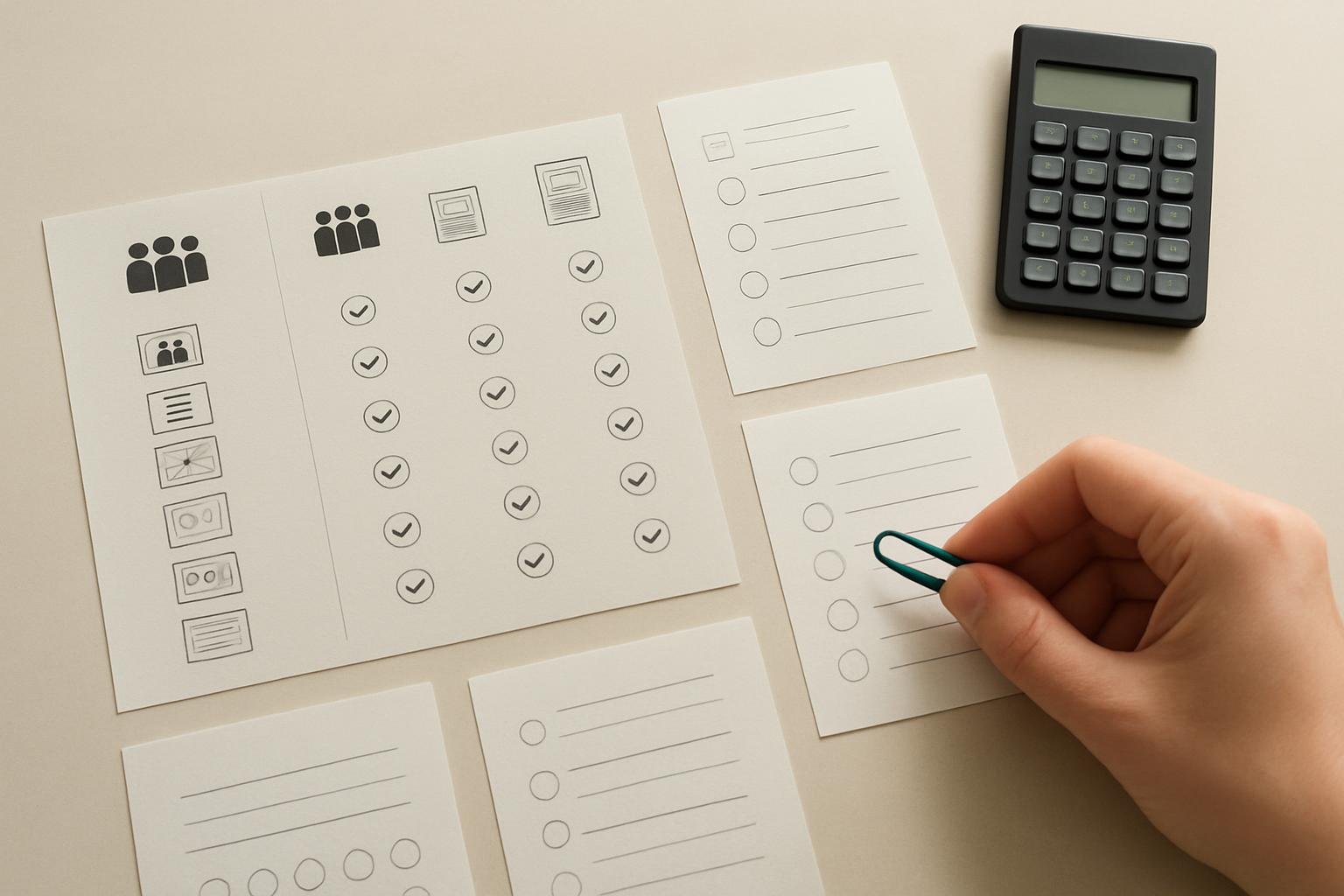
One question set is enough for skills mapping when everyone shares the same discovery goal and the questions capture enough detail to support your intended decisions. Separate sets become useful when groups need substantially different specialist questions, evidence or follow-up. Do not count departments and assume you need a set for each. Start by checking whether one shared conversation can produce useful, comparable records without making people answer questions that do not apply.
For an HR or learning and development team choosing software, this is a design decision before it is a subscription decision. A single well-designed set may cover a varied workforce. Several poorly defined sets may simply create more records to reconcile. The useful test is whether the answers tell you whom to approach, what to check and where development is needed.
Separate the question set from the conversation
For planning purposes, think of a question set as the agreed topics and prompts behind an exercise. A fixed questionnaire gives participants a predetermined sequence, sometimes with conditional sections. An adaptive conversation changes its follow-up questions in response to answers. Both need a clear scope: what must be covered, what detail matters and what should stay outside the exercise.
One set therefore does not necessarily mean everyone receives identical wording. Equally, an adaptive conversation is not proof that one set covers every specialist requirement. A general prompt about technical experience might uncover an interest in data analysis without establishing whether someone can independently build and maintain a reporting pipeline.
When assessing software, ask the supplier to show what a question set contains and how follow-ups work. Check which topics you can require, whether irrelevant questions can be avoided and how specialist detail is captured. Do not assume that branching, role-specific sections or different reporting arrangements are included just because the interface looks conversational.
When one shared set is a sensible starting point
Start with one shared set when the immediate task is broad discovery: understanding experience across a team, finding potential project contributors or identifying topics for development discussions. These goals can often share a common structure even where people's daily work differs.
Useful common questions explore what someone has done, the context, how recently they did it and how independently they worked. They should also leave room for experience gained outside the current role. A person's job title is a useful starting point, not a boundary around everything they can contribute.
- Ask for a relevant example: what task did the person complete, and what was their own contribution?
- Establish current readiness: could they assist, work independently or guide others on a similar task?
- Separate capability from interest: would they like to use this skill again, develop it or leave it outside future opportunities?
For example, a hypothetical operations team might use one shared set to discover spreadsheet automation, supplier negotiation and event coordination experience. The examples differ, but the information needed to make an initial match is similar. That does not establish competence for every assignment. It identifies people worth approaching and the checks that should follow.
Split sets when the decision needs different evidence
The strongest reason to create a separate set is not organisational structure. It is a material difference in what you need to establish. If the common questions leave an important decision unanswered, more targeted questions may be justified.
Specialist work needs more than a broad skills label
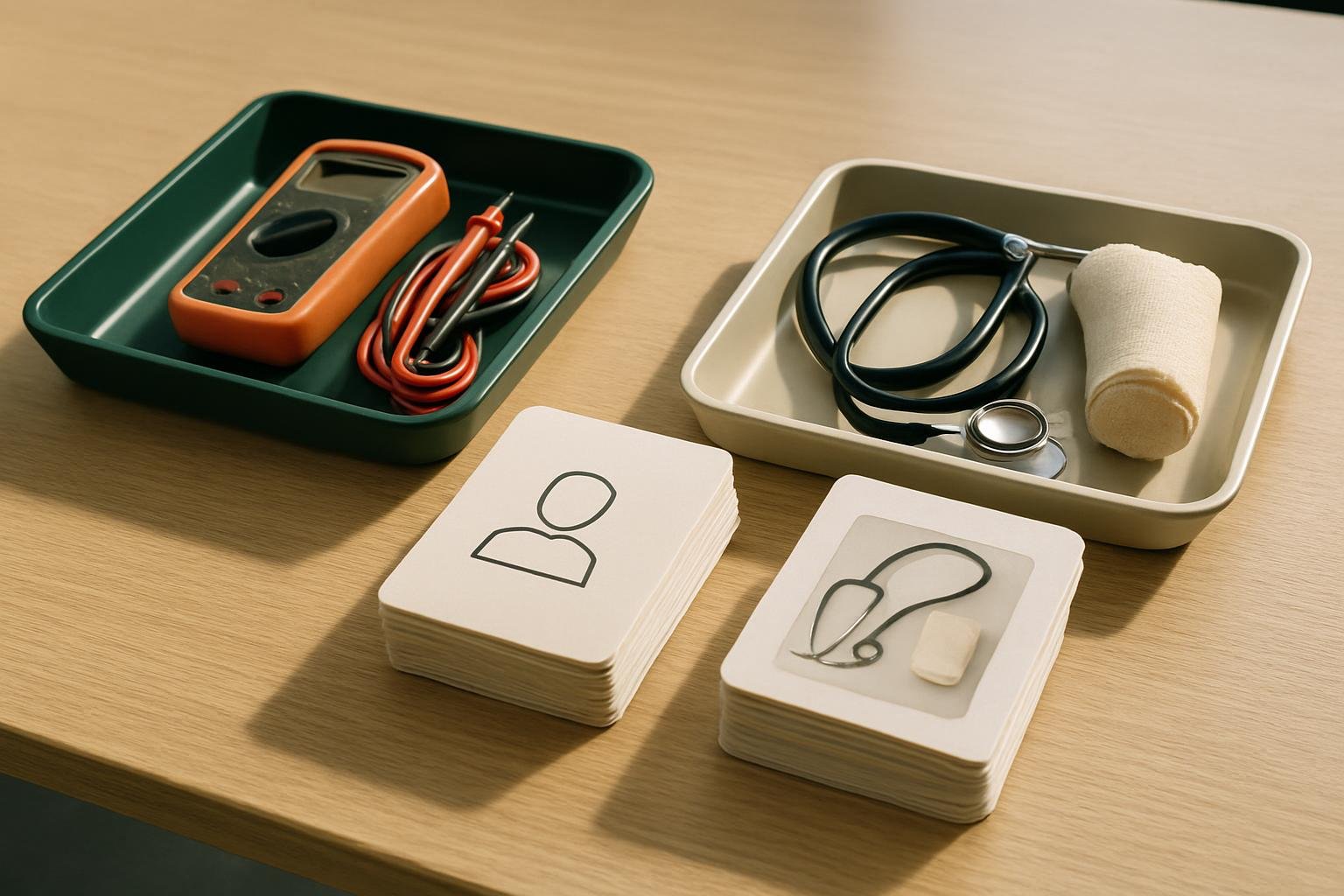
In an illustrative engineering team, general discovery might identify maintenance experience. Planning independent work on particular equipment requires more detail about the equipment, tasks performed, recency and relevant checks. A specialist set can organise those questions. It still cannot replace practical assessment or verification of qualifications and authorisations where these matter.
Different responsibilities change the questions
A charity board and its delivery team may both need financial knowledge, but governance oversight and preparing accounts are different responsibilities. Use consistent categories where helpful without treating the evidence as interchangeable. For a board-specific exercise, the comparison of trustee skills audit questionnaires and AI conversations explores the collection decision in more detail.
A different purpose may deserve a separate exercise
Do not make a skills conversation carry unrelated tasks simply to stay within one allowance. A wellbeing check-in, performance discussion and skills discovery exercise ask people to share information for different reasons. Keep the purpose and intended audience clear. If a proposed question does not support the skills decision, remove it or give it a separate, appropriately managed process.
Keep records comparable even when questions differ
Separate question sets do not have to produce disconnected skills maps. Define the common record before writing specialist questions. Agree skill names, descriptions of proficiency, how recency is recorded and how to distinguish reported experience from checked capability.
Be careful with broad labels such as communication or project management. Someone who has coordinated a small internal event and someone who has led a complex construction programme may both report project experience. Preserve the context rather than giving both an unexplained score of four out of five.
Also distinguish not asked, unanswered, no experience reported and experience awaiting review. These are different findings. If one group was never asked about a skill, comparing its apparent coverage with another group's results can create a false gap. Record which set and version produced each response so reviewers can understand differences.
Pilot the shared set before expanding it
Test your draft with people whose work and experience differ, not just the team that wrote it. Include someone new to the organisation, someone with specialist responsibilities and someone whose wider experience may not be obvious from their role. Treat this as a design check, not a representative workforce survey.
- Check relevance. Ask participants which prompts were unclear, repetitive or unrelated to their work.
- Check coverage. Ask what important experience the conversation gave them no reasonable opportunity to describe.
- Check interpretation. Let participants review their summaries and identify conclusions that overstate or miss their contribution.
- Check usefulness. Give a manager a realistic task and see whether the records identify suitable people, uncertainty and necessary follow-up.
Classify each problem before changing the design. Unclear wording calls for editing. Missing context may call for a better follow-up. A consistently absent specialist topic may justify a separate set. Do not split the exercise merely because one participant gave a short answer, and do not retain one set if reviewers repeatedly need a second interview to establish the same essential facts.
Translate the design into subscription requirements
SkillDrill uses adaptive AI conversations to identify skills, qualifications and experience. It lets organisations build a custom question set or adapt a template. Assess those options against your pilot findings rather than assuming either a template or a blank starting point will automatically suit every group.
SkillDrill Starter includes one question set, while Professional, Business and Enterprise include unlimited question sets. An unlimited allowance gives you room for distinct exercises, but it is not a reason to create them unnecessarily. Each additional set needs an owner, a clear purpose and a review process.
Before subscribing, ask how the allowance treats edits, archived sets, repeat exercises and specialist variations. Establish whether changes affect existing records and how results from different sets can be compared. Then use the guide to choosing a question software plan to assess the wider subscription requirements alongside your question design.
Your next step is to draft one shared core and mark the decisions it cannot yet support. Keep one set if better wording and follow-up close those gaps. Add a separate set where a genuinely different purpose or evidence requirement remains. Buy the allowance that supports that design, rather than reshaping the exercise to fit an allowance.